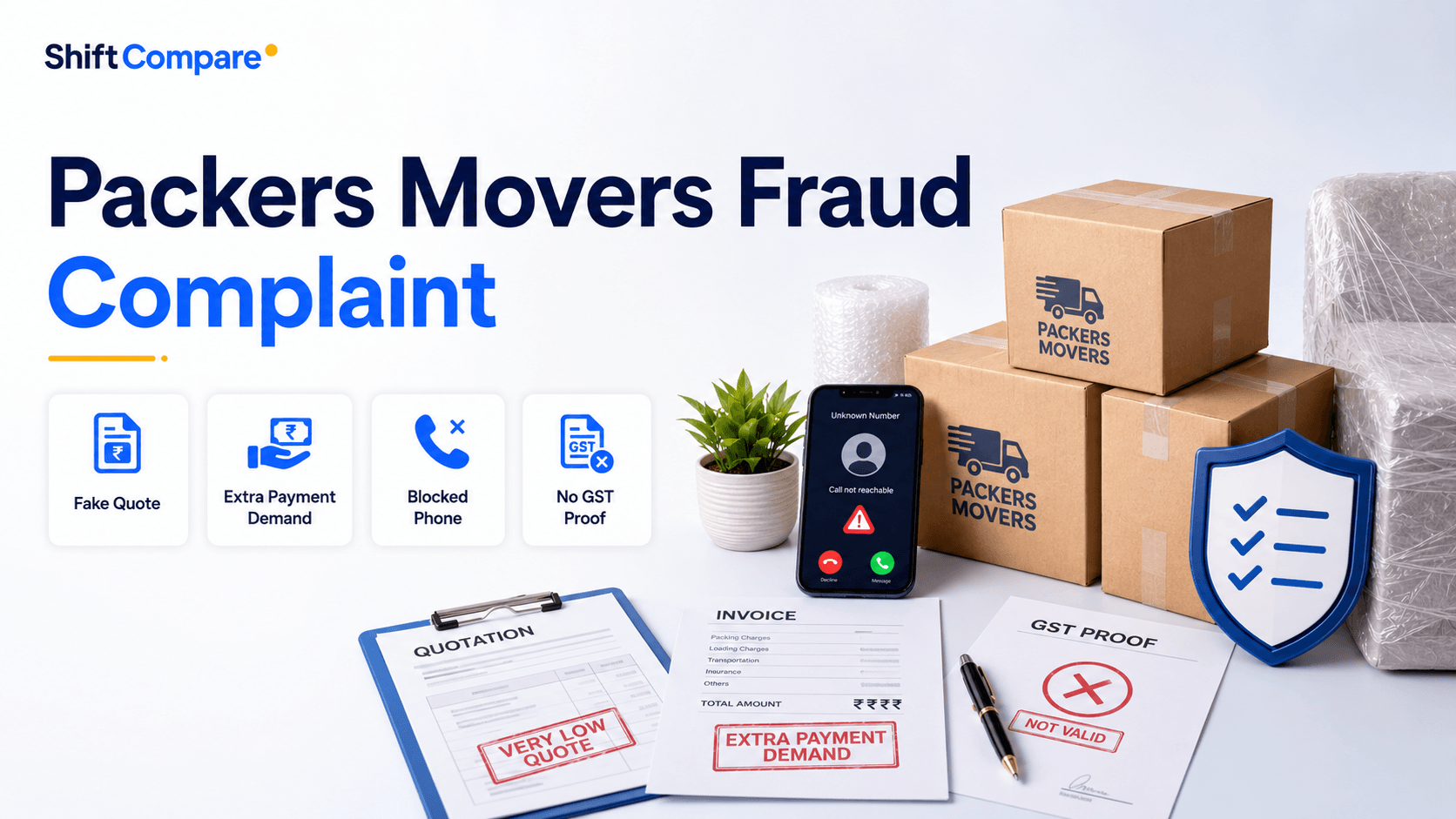
First decide whether it is fraud or a service dispute
Not every bad move is fraud. A mover can be late, careless or expensive without being a criminal. Fraud usually has deception or dishonest pressure: fake company identity, payment taken with no service, goods location hidden, false GST use, extra money demanded after loading without written basis, or threats when the customer refuses.
This distinction matters because your next step changes. Service disputes usually start with written complaint, National Consumer Helpline and consumer commission options. Theft, threats, fake identity or payment cheating may need police or cybercrime steps. If you are unsure, preserve proof first. Proof helps in both paths.
Common fraud patterns in packers movers
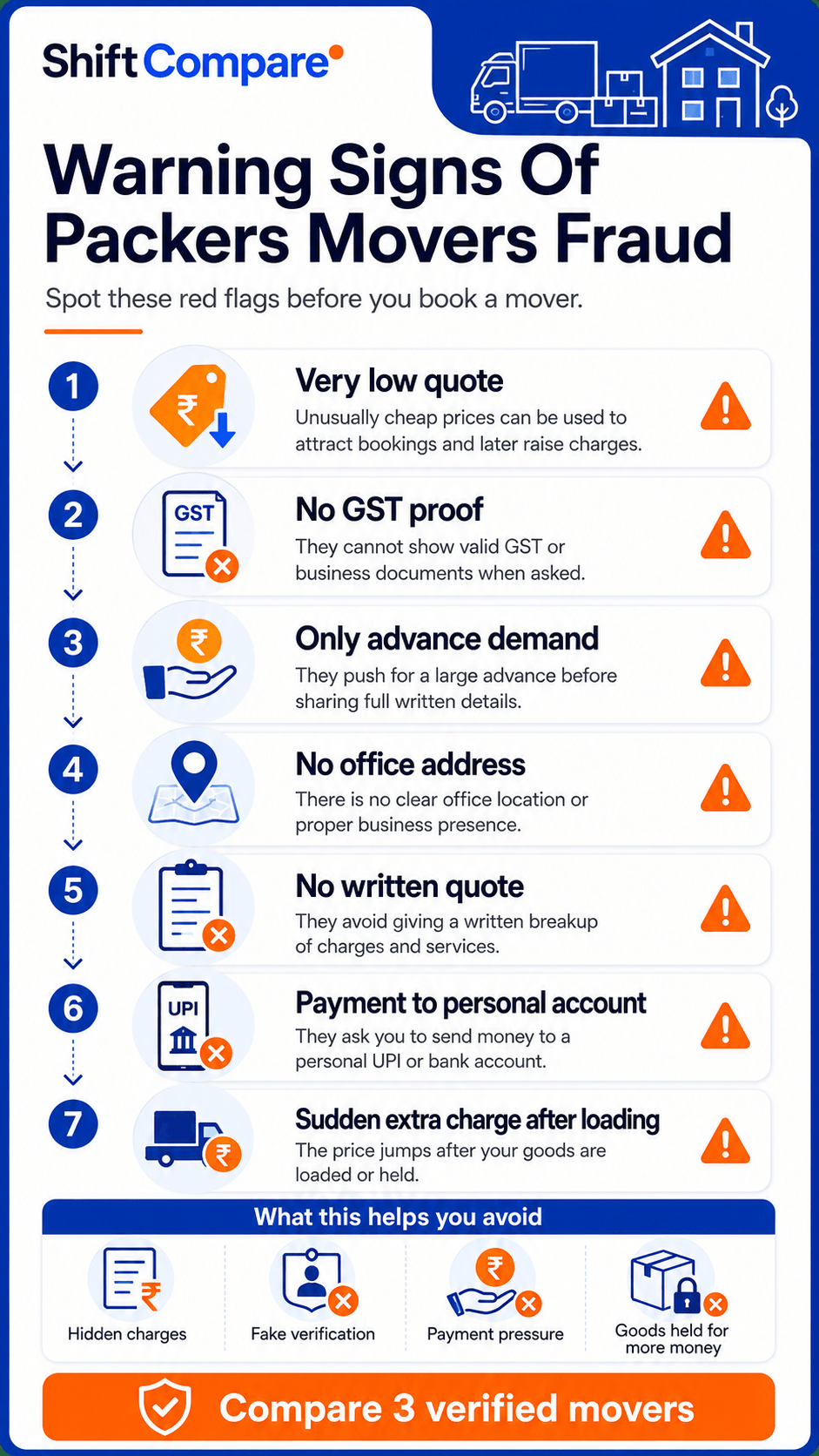
The most common pattern is a very low quote followed by pressure. The caller says the truck is ready, asks for full or heavy advance, refuses a proper written quote and sends a personal bank account. After loading, the amount changes. Sometimes the mover says GST, insurance, long carry, unloading or route charges were not included, even though the customer was never told clearly.
Another pattern is identity mismatch. The website name, GST name, payment account name and truck sticker do not match. One mismatch may have an explanation. Three mismatches are a warning. Before paying, use the Verify Packers Movers tool, ask for a company account and compare the written quote with our quote reading guide.
Proof to collect before filing fraud complaint
Save the mover name, phone numbers, WhatsApp chats, website link, GSTIN if shared, quote, invoice, payment screenshot, UPI ID, bank account, truck number, driver name, pickup photos, loaded truck photos, bilty, inventory list and delivery address. If goods are still with the mover, ask in writing for the current goods location.
Do not delete call logs or chats. Do not keep proof only inside one phone if the phone is about to die. Forward key screenshots to your email or a trusted person. If the mover threatens you, save the message and avoid long phone arguments. Written proof is stronger.
Where to complain based on the issue
For damaged goods, refund refusal, wrong billing or poor service, start with written complaint and consumer grievance channels. For online payment cheating, fake digital links or impersonation, use cybercrime options. For theft, threat, extortion or refusal to disclose goods location, local police may be relevant.
Keep the complaint factual: who, when, how much, what was promised, what happened, what proof you have and what resolution you want. Avoid sending ten-page emotional messages. A clear table of dates and proof often works better.
How to write the complaint message
Write one firm message to the mover before escalation. Mention the move date, route, paid amount, issue and deadline. Example: "Your team collected goods from Sector 56 Gurgaon on 8 June 2026 for delivery to Noida Sector 137. I paid Rs 18,000 by UPI. Delivery is not completed and your team is asking Rs 9,000 extra without written breakup. Please share goods location and written charge basis by 6 pm today."
This message gives the mover a chance to resolve and creates a clean record if you escalate. If there is threat or immediate risk, do not wait only for customer-care style response.
How to avoid the same trap next time
Use matched and verified movers where possible. Ask for written quote scope, company account payment, fair advance, inventory list, GST proof if GST is charged and insurance terms if you want cover. Do not pay full advance before loading. Do not accept a quote that refuses to name packing, labour, transport, GST and delivery conditions.
ShiftCompare's trust work exists for this exact reason. The site is being built around verification, proof-backed reviews and a no-spam policy, so the booking process feels less like gambling.
Red flags before you transfer money
Pause if the mover refuses to share a written quote, pushes a large advance, asks for payment to a personal account, uses a name that does not match the invoice, or says GST will be added later without showing GST proof. Also pause if the caller keeps changing company names during the same conversation. Genuine small movers can be informal, but they should still explain who is taking responsibility for your goods.
Ask one simple question: "Which company name will be on the invoice and whose account am I paying?" If the answer is confusing before pickup, it will become worse after loading. A slightly higher verified quote is often safer than a cheap number with no identity.
Fake website and copied-brand checks
Some fraud cases start with a copied brand name or a lookalike website. Check the domain spelling, phone number, address, GST name and payment account before transferring money. If the website has no company details, no address, only stock photos and a heavy discount message, slow down. A real mover should not hide basic identity.
Search the phone number and brand name together. If the same number appears under many different mover names, or the address points to a random unrelated place, ask more questions. Do this before paying the advance, not after the truck is already at your gate.