
Photograph damage before moving the item
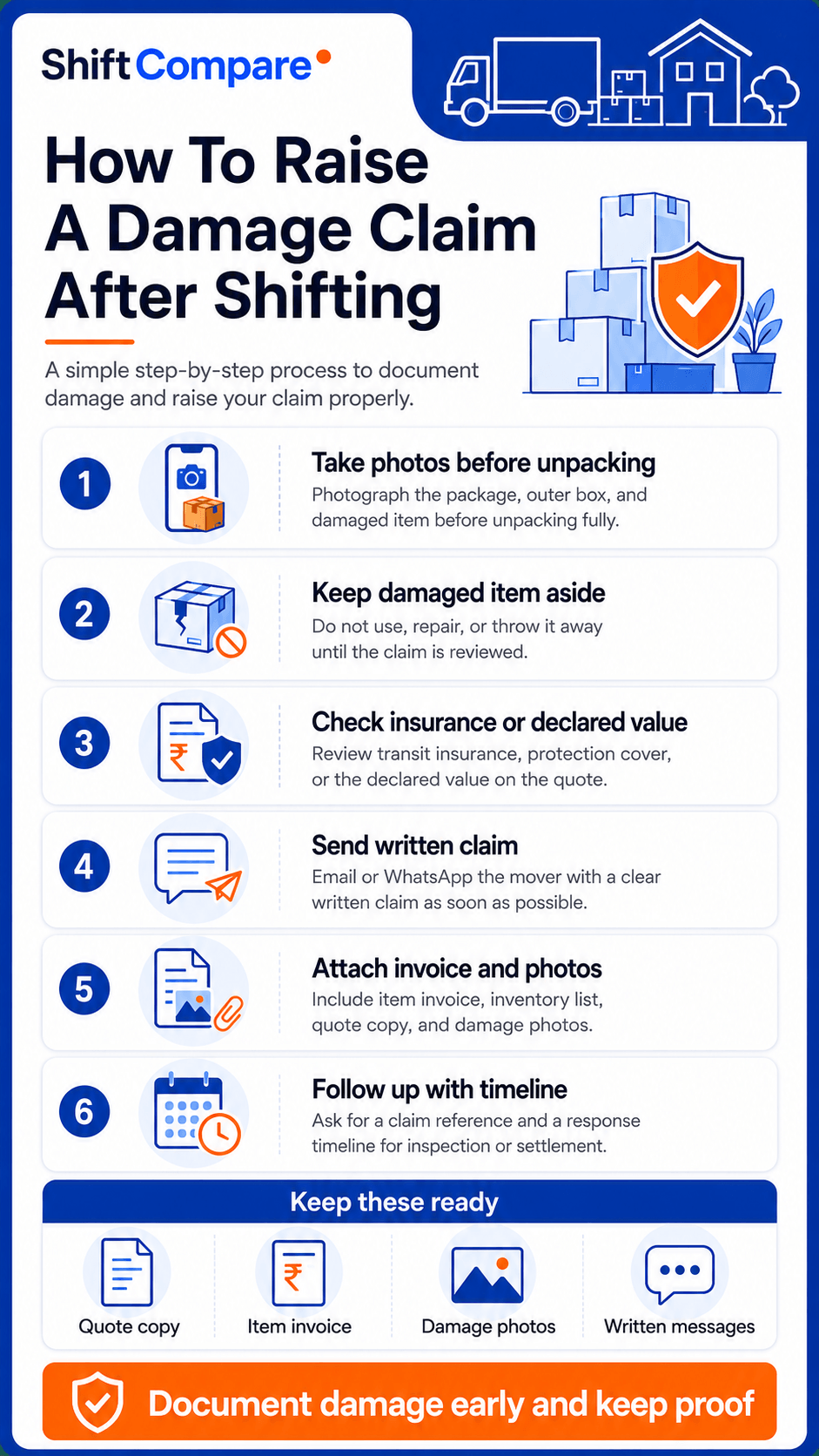
When you notice damage, stop and photograph it before shifting the item again. Take wide photos, close-up photos and photos showing where the item was placed after unloading. If the damage is on glass, wood, appliance body or electronics, capture enough detail that the mover cannot call it a random old mark.
If the unloading team is still there, show them the damage and write it on the delivery note. A delivery note with "dining table glass chipped at delivery" is stronger than a phone call the next morning. If they refuse remarks, message the company immediately and mention the refusal.
Check whether insurance was actually included
Many customers hear "insurance included" but never see a policy, declared value or claim process. That phrase is not enough. Check whether the quote mentioned insurance, what value was declared, what goods were covered, what exclusions apply and whether GST or premium was billed separately.
If insurance exists, ask the mover or insurer for claim steps. If insurance was optional and you did not take it, you can still ask the mover to resolve damage caused by poor handling, but the discussion becomes based on service responsibility and proof rather than insured cover. Read transit insurance charges before your next move.
Prepare a written damage claim
Your claim message should include move date, route, item name, damage description, photos, inventory reference, delivery note remark, quote or invoice number, and the resolution you want. If repair is possible, attach a repair estimate. If repair is not possible, attach value proof or replacement estimate where available.
Keep the wording practical. "Please repair or settle the damaged washing machine panel" works better than an angry paragraph. Give a clear deadline for response. Save all replies. If the mover calls, summarise the call on WhatsApp after it ends.
How movers usually respond
Some movers accept the issue and send a technician or offer a settlement. Some say the item was already damaged. Some blame weak packing, old furniture, road vibration or customer unpacking. Your proof decides how strong your position is. Pre-move photos and delivery-note remarks are the two most useful pieces.
If the mover offers a small settlement, compare it with repair cost and your proof. A practical settlement may be better than weeks of chasing, but do not accept a token amount if the damage is serious and proof is strong.
When to escalate a damage claim
If the mover does not respond, denies obvious damage without checking, or refuses to support insurance paperwork, use the complaint guide. For consumer grievance, keep proof organised: timeline, invoice, quote, photos, delivery note, repair estimate and chat screenshots.
Damage claims usually fit service dispute or insurance paths, not police, unless there is intentional damage, threat or other fraud. Keep the escalation matched to the facts.
Prevent damage before pickup
Before loading, photograph expensive items, point out weak furniture, ask for packing material details and keep small electronics with yourself if practical. For glass, appliances and TVs, ask what packing is included. For furniture dismantling, ask who will reassemble and what happens if fittings are lost.
Also compare movers by packing quality, not only quote price. A slightly higher quote with proper packing and written insurance terms can save more money than a cheap quote that leaves your fridge dented.
Damage proof checklist by item type
For appliances, photograph the front panel, sides, plug area and serial sticker before pickup. For furniture, photograph corners, legs, glass tops and dismantled fittings. For TVs and monitors, take a switched-on photo before packing, then another photo after delivery before installation. For marble, temple units, crockery and artwork, ask if wooden crate or extra packing is included in the quote.
Damage disputes often become "old mark versus transit damage." Pre-move photos reduce that argument. If the item was already scratched, note it honestly. You do not lose trust by admitting an old mark. You lose claim strength when the mover can say every mark was hidden before loading.
How to decide between repair and settlement
Repair is usually better for appliance panels, furniture scratches, loose fittings and minor glass work when a proper technician can fix it. Settlement may be better when repair cost is close to item value, spare parts are unavailable or the item is no longer safe to use. Ask for a written repair estimate before accepting a small token amount.
If insurance applies, do not throw away damaged parts until the insurer or mover confirms what they need. Keep bills, photos and chat records together. A damage claim is not won by anger. It is won by proof, timing and a clear demand.
What a fair damage response looks like
A fair mover response does not always mean instant cash. It can mean sending a supervisor to inspect, arranging a technician, helping with insurance paperwork, offering a reasonable repair settlement or writing why the claim is not accepted. The key is that the mover responds with facts and timeline, not silence.
If the mover says the damage is excluded, ask them to point to the written quote or insurance terms. Verbal exclusions after delivery are weak. Written exclusions before pickup are different. This is why quote reading matters before booking and why damage terms should never be left as a casual phone promise. Keep the damaged item available until the response path is clear.