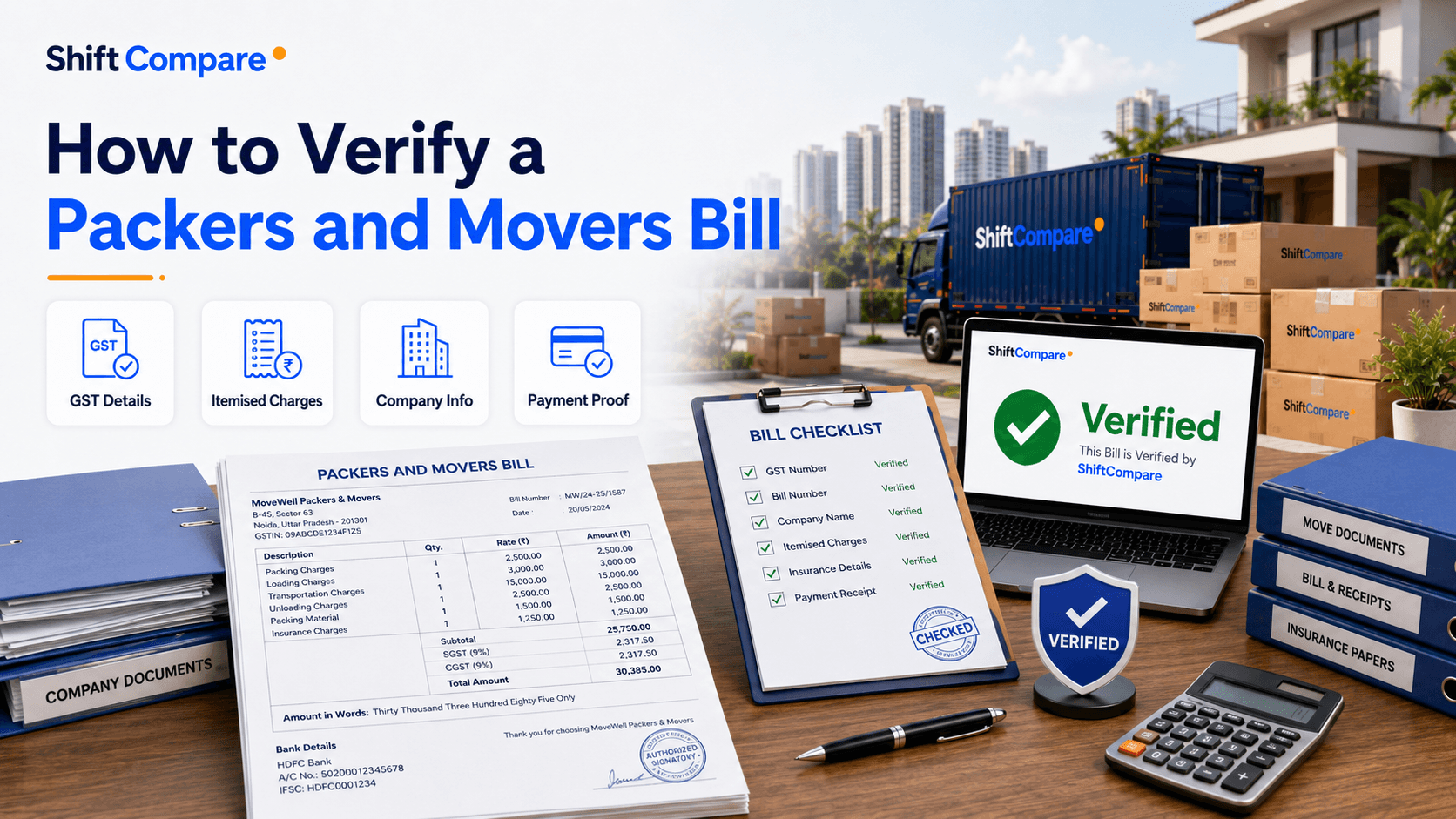
Step 1: Check GSTIN and legal name
Start with the GSTIN printed on the invoice. Use the official GST taxpayer search to confirm Active status, legal name, trade name if shown and state. The name does not always need to match the brand word-for-word, because trade names and legal names can differ. But the mover should be able to explain the link clearly.
If the GSTIN is invalid, inactive or belongs to a completely different business with no explanation, pause the claim. Do not submit a document just because the amount looks correct. HR teams can run the same check in two minutes.
Step 2: Check invoice date and registration date
The invoice date should make sense against the move date. The GST registration should not start after the invoice date. If the invoice is dated before the business existed, that is a serious warning. Also check whether the invoice date fits your employer reimbursement window.
For delayed invoices, ask the mover to explain in writing. Some delays are normal in small businesses, but a backdated or freshly invented invoice can create trouble during finance review.
Step 3: Match the bill with the move
A genuine moving bill should connect to the actual route and service. Look for pickup city, delivery city, customer name, service description and itemised lines. If the bill says only "transport" but the claim is for full packing and moving, the finance team may ask for more detail.
| Bill field | What to match | Why it matters |
|---|---|---|
| Customer name | Employee or policy holder name. | Prevents claim ownership doubt. |
| Route | Pickup and delivery city or address. | Shows the move actually happened. |
| Service line | Packing, transport, labour, GST. | Explains what was paid for. |
| Amount | Quote, receipt and payment proof. | Stops mismatch during reimbursement. |
Step 4: Cross-check bilty or LR
Bilty or LR is the movement document. It may mention consignor, consignee, route, goods description, vehicle details, LR number and date. Not every local move is documented perfectly, but if your employer asks for bilty, tell the mover before booking. After the move, getting a proper LR can be harder.
For intercity moves, bilty matters more because goods actually travel across cities. If the LR route and invoice route do not match, ask for a correction or written explanation before claim submission.
Step 5: Match payment trail
Payment proof should connect to the mover or the billing entity. Business UPI, bank transfer, receipt and invoice should tell the same story. A personal UPI payment does not always mean fraud, but it creates weaker proof for reimbursement. Ask for receipt with payment mode if you paid partly in cash.
If HR asks why payment went to a different name, you need an answer. Better to fix that before submission than after rejection.
Common fake or weak bill signs
Watch for handwritten GSTIN, no invoice number, no route, no bilty, no payment proof, GSTIN inactive, invoice from a different company, suspicious round amount, invoice date after policy deadline and service wording that does not match the move. One issue may be a correctable mistake. Several together are a red flag.
If the bill came from a site selling relocation bills without doing the move, do not use it. That is not a document problem. That is a false claim problem.
Verify the amount against the quote
The bill should match the final written quote or clearly explain the difference. Extra cartons, stairs, waiting, premium packing, insurance or GST can change the amount, but those lines should be visible. If the quote was Rs 18,000 and the bill is Rs 27,000 with no explanation, ask for a corrected breakup before submission.
Use how to read a moving quote and hidden charges if the bill has unclear words like miscellaneous, handling or extra service. HR may ask the same question later, so it is better to clarify now.
When the bill is genuine but weak
Not every weak bill is fake. Some small movers issue poor documents even for real moves. If the move was genuine, ask for a corrected invoice, clearer receipt, route detail, bilty copy or GSTIN confirmation. Keep the old and corrected versions together so the correction trail is visible.
If the mover refuses to correct basic errors, submit only after checking with HR. A small correction before submission is easier than a rejected claim after audit.
Before you ask for a corrected bill
Write the exact correction needed. Do not ask vaguely for a "better bill." Say whether the GSTIN is missing, the route is incomplete, the payment mode is wrong, the invoice name needs correction or bilty copy is pending. Clear requests get faster corrections.
If the corrected invoice changes amount, GST or date, ask why. A correction should make the document more accurate. It should not create a new story that does not match the move.
Keep a small verification note
When the claim amount is large, keep a simple note with GST check date, legal name seen on the portal, invoice number, payment mode and bilty number. This helps if HR asks the same questions later. It also avoids repeated calls to the mover for details you already checked once.
Employee and HR side checks
Employees should verify before submission so the claim is not delayed. HR and finance teams should check the same facts without assuming every mismatch is fraud. Trade name and legal name differences happen. GST thresholds affect small movers. The right approach is to ask for proof, not jump straight to accusation.
If the move has not happened yet, read packers movers bill for claim first and tell the mover exactly what documents your employer needs.